Interview with Rebeca Huntt - Rapinoe (TIFF 2026)
Ahead of the world premiere of Rebeca Huntt’s personal documentary focused on legendary American women’s soccer player, Megan Rapinoe, I sat down with Huntt herself to discuss the film.
*Please note that filler words (i.e. um, yeah, etc.) have been removed for a more simple read through the interview with Rebeca.
Hailey: Hi, how are you?
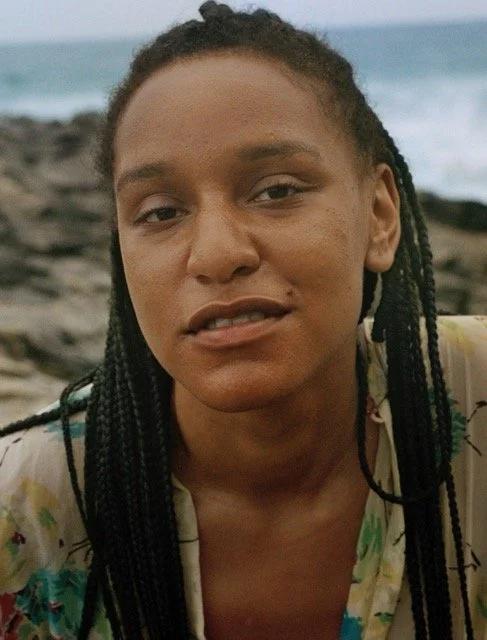
Rebecca: I've been all right. I'm doing well. I’m excited about what's coming in life in general and yeah I'm excited to be here chatting with you Hailey. How are you?
Hailey: That's good. I'm good thanks. I really enjoyed your documentary. It was really — I liked it because it was personal but it was also informative and, being queer myself and a female, I could relate in that way. I didn't do soccer, well I did do soccer, but I didn't do sports as an adult but it's still nice to have a documentary where you can learn something and you can connect with it too, so thank you.
Rebecca: That's so amazing to hear because literally queer youth is who we made this film for.
Hailey: It feels like it, honestly, that's who the audience is for. You always hope that it'll help those who it's made for but that it'll inform those who it's not made for.
Rebecca: Yes for sure. We want everybody to be able to watch this movie and get something out of it. But in my mind, it was queer youth that I was, [that] the film is, directly sort of speaking to.
Hailey: For sure you can definitely feel that. In that too, how did you become, how did it become your product, your directing project?
Rebecca: So Dan Cogan, who is the CEO of Story Syndicate, the production company that made the film, he and I had met through my agent, and we had gotten along. We'd had these conversations around art and you know cinema and all this stuff. Then he said you know Megan Rapinoe? You know, we're going to make a film for her. Would you be interested? I can connect you guys. And I was like yeah of course, are you kidding? Then basically from the time that he said that, until the time that I spoke to her, it was about two or three weeks and in that time I was already a fan of hers as an activist and you know a celebrity. But I spent the time just watching every piece of content of hers on the internet, and then also read her book like three times during that time. Just like serial read, actually I read it twice only and then heard it once [on] a audiobook because I was just kind of taking notes.
I already had this idea of what interested me about in her, but then — when I had over prepared — when I was actually having the conversation, it all just like went away and we had this really deep conversation where we both ended up crying and that's when I was like I feel like I knew but I also didn't want to be cocky because she could have, she literally could have anybody direct her documentary. So then a couple days later, she added me on Instagram and I was like that's a sign, that's a sign, that's a sign! And then a couple days after that they were, we’re gonna go with you and I was, I knew deep down that it was my destiny to direct this film.
Hailey: That's so cool, that's so sweet too. That Instagram thing that's so funny because that is, it’s kind of fun because I feel like…Sorry this is not even about the film anymore but the Instagram thing when you, for teenagers and stuff it's kind of, but for adults it's kind of [perfect], yeah sorry.
Rebecca: I mean you're making so much sense, it's a thing, it’s like…
Hailey: It is.
Rebecca: It's so real.
Hailey: Going from, your feature, your feature is a self-portrait, right? How did it feel going from something about so personal about yourself to a documentary so personal about someone else?
Rebecca: It felt literally glorious. It felt like everything that I was supposed to do, I feel like I only made a self-portrait because it's what I had access to at the time, you know? But I'm a director, you know? So it’s, I'm a writer-director, so I really just felt a billion times more at home, in my sort of rightful place you know. Kind of storytelling behind the camera. It was beautiful especially to be able to do it with someone like Megan. I mean she is just so, she was such a rich character in her family and the story in this day and age. It was just a real honour.
Hailey: For sure and in that too, did you work, because documentaries don't have a script perse like films do, but did you work with Megan on how you wanted to present it, from how it started? Is that a spoiler saying how it starts?
Rebecca: No, but just maybe kind of don’t, but I understand. Can I answer the question without you, if you’re good? So okay honestly the only thing, like her and I really touched base about the film on an emotional and depth level of I want to make something really intimate and personal and different and it's going to be a sports film but it's going to be a different kind sports film and she was like okay. She was like just you know whatever you want, whatever art you want to make, just make it and I was like oh yeah, this is the dream and she just let me do whatever I wanted. And I was like oh we're gonna shoot it on film, it's gonna be on 16 millimetre and it's gonna be super personal and I have to interview you 30000 times and she was just f*cking down dude, like iconic.
Hailey: That's so cool. I was actually going to ask about that at some point too because I was wondering because you used archive footage, you used clear family footage and TV footage and you could see the TV get more and more digital like it has in the past 26 years. But yeah the interviews I didn't realize, now that you say 16 mm, it does make sense because it stays the same and in that too, how long did you interview Megan for? Because her hair was blue, blonde and pink in the documentary?
Rebecca: Yeah cool, that was my favourite one, that like light purple, magenta. The film, it took us three years.
Hailey: Okay. Did it start after, this is me asking and knowing 2023 was 3 years ago, did it start after the football, sorry soccer I live in the UK so that’s what I got used to saying.
Rebecca: No, you should say that because we're the only country that calls it soccer so you're actually saying it right. The World Cup you mean?
Hailey: Yes, did it start, did the filmmaking process start after that or during?
Rebecca: Before.
Hailey: Okay yeah.
Rebecca: Like a couple months before.
Hailey: Okay, that would make sense then with some of the hair.
Back to you being a filmmaker, do you think telling stories like Megan’s, telling stories like yours, personal stories, works best in a nonfiction format. Or would you ever consider adding elements of fiction to these ideas? Do you think you'd want to make stories in that format or do you enjoy being able to tell the truth, people's truths?
Rebecca: I think it’s, I think that all of the stories are rich. I definitely see myself working in fiction in the future, in a fiction space and I also really have enjoyed working in non-fiction and see deep value in both.
Hailey: Good, yeah that's so nice.
So Megan gave you the permission to do the film, or to just take creative freedom over it and then you were, you said you watched everything you could on her: online, you read her book twice, listened to it once. When you started making and planning out the documentary, where did you grab the footage from? Or where did you get the archival footage, so not your filmed stuff?
Rebecca: Well I think okay, so there's two ways of basically a script or whatever that or the way that I kind of designed it. So right after Megan said yes, I designed my own sort of script for it that I never show anybody and it's how I, the questions I know how to ask. It's how I just know what I need to shoot, know what I want to shoot, it's just my own sort of format and it's mostly questions that I have. Quotes, references from other films, you know what I mean? There's a few different shot lists in there. How I want the mood of the film to be, the colour scheme that I want the film to be, and the what I want people to feel from the film. So it's just really this sort of three-act collage that I sort of make and nobody ever sees that except for me. That kind of is my guiding light in production and then it's like a code of how the film would feel right.
Then right before I start in the edit, usually you know, it's the team and the financier or the producers are all like what is this going to be? Then that's when I kind of make a sort of three-act structure based on the footage that I've caught, that I have and what we have filmed and what sort of, what archival we need and then I sort of draft and then my editors tend to take it to the next level which is exactly what they did.
Hailey: Yeah because there's more, because you don't want to watch a full soccer, full football. I don't know what to say, a football game and watch the whole thing. But did you help pick out the moments that you wanted and then they just edited them together?
Rebecca: Oh yeah for sure.
Hailey: Yeah, because they were really good and you could, you see what you need to see. You don't see what you need to see like at you know what I'm referring to at specific points you're held back and you know. Then in the interviewing that you did, how did you know that you wanted to do such close-ups in the moments and there's also moments where you have a split screen and it adds so much more emotion to the film because you see Megan talking about her mom. Or any of those moments and you're trying not to cry watching it. How did you know you wanted to do the close-ups and have those moments?
Rebecca: Okay this is this is actually my favourite question I've been asked so far Hailey, so you're doing such an incredible job!
Hailey: Thank you.
Rebecca: So the first thing I'm going to say is the close-ups, there’s a film which I feel is one of the most important films in queer cinema called Portrait of Jason. When you haven't seen it, it's a must and it's directed by Shirley Clark who is a controversial but prolific filmmaker, and there was an exploitative nature to it so I just want to be honest about that. But the film within itself is an important piece of American history and queer cinema where she interviews, the entire film is an interview that she does with a friend of hers who is a black male prostitute, a cis male prostitute, a gay man. And it's a film that was shot in the 1960s and it's this Jason is this fascinating character. He's incredible and has sort of you know, he has taste, he's stylish. He's highly intelligent, he knows art well and is someone who you can kind of really tell has sort of moved through all of these different spaces in society and culture in a really sort of fascinating way and that sort of lens gives America, the lens that we get from America in that time is really special and one of the things which her cinematographer did was he would do these really extreme close-ups and it's one of my favourite films of all time. It's mesmerizing and it made me feel so close to this person who otherwise I would feel that I had obviously there are certain things in common in terms of you know his blackness and just you know his queerness, there are things that I think we could probably relate to but it's such a different experience not to compare it to obviously being a superstar athlete but they're just, it's inconceivable to me to be a sex worker in the 19, a black sex worker in the 1960s and it's also inconceivable to me to be a famous athletic sports icon celebrity. You know what I mean. I'm not saying…
Hailey: Yeah.
Rebecca: So I thought it would be an interesting sort of way of bringing us closer and bringing us in, instead of kind of keeping us out. And doing those really sort of clean documentary shots, which bore me, I also feel there was this… yeah I also, yeah that was important to me. That was really important to me, those close-up shots were extremely important to me and even if it got blurry and it got messy I didn't care. It was what was important was to for us to feel close especially during a time when division is so, it’s such a big part of the crap that we're being fed and it wasn't just her you know, it's like all of the interviews have an element of that, it's like you're fucking close and because it's humanity, it's a mirror you know and then with the three women it just, I don't know, I just felt it was more dramatic like a Pedro Almodovar film you know? It's like where they're these strong beautiful women and sometimes they're in a split screen or sometimes it's that and you're just seeing them in this moment of crisis and emotional sort of challenge and life it's like real and I, in a way even though it's this really hard moment, it is still an ode to all three of these women you know because it's not about being perfect, it's not about you know, it's life is messy, love is messy, family is messy, transition is messy, authenticity it can even be messy. It was about doing it respectfully.
Hailey: And you're not hiding any, that’s the other thing about your film, it might, it doesn't hit on everything but it hits on the truth that needs to be there to share this part of this story that Megan's allowing you to share with the world and it's really nice to know that you did that through your past knowledge of film and taking it and influencing you like to do those because you knew that it did. Bringing you in personally or it split the screens and it was three females. So knowing that and seeing it reflected in the film, in such a personal film, is really beautiful to see.
Rebecca: Yeah and those were things that were, even before we started shooting though specifically. The two things you asked about were always in my mind even in the very first iterations of the mess of the sort of bible that I make before I even start shooting to the first iterations of the outline of the film. Those shots were in there you know. It was extreme close-ups interview shots. It was the Pedro Almodovar women you know.
Hailey: Was it from what you had learned about Megan that you knew you needed those?
Rebecca: Yeah well I knew I wanted to make the interviews that way. I didn't know about Megan yet and then in terms of the Pedro Almodovar I didn't know when I was going to do that but I just thought it would be interesting to have her twin and her mom and her in the same frame in a moment of collapse.
And I knew that there were because i had already read the book and done my research and stuff and so it was just a matter of where you know or I hoped for. It kind of revealed itself to me you know.
Hailey: Where it fit once it happened. For sure.
Rebecca: Or maybe I didn't know, the Pedro Almodovar, I maybe didn't know before I shot actually and then maybe after it was revealed to me…
During the interview, during the interview with her mom, no during the interview with Rachel it came to me and I just wrote it down and then put it away and then once we were ready to edit it that's when I yeah… I'm glad that I cleared that up.
Hailey: Well either way it really works and I think as I feel like it's when it's daughters and a parent it hits a lot harder and I don't know why…because it does when it’s, I don't know, maybe it's because I'm a daughter probably for that reason but that's another thing, that's another layer to be able to connect with it but i feel like everyone can connect with the story, with Megan's story. But also there were moments too where because she talks about dissociation and stuff but it also talks about all the other, how she went from just being a football player to an activist and I feel like in that, was it purposeful trying to implant some other societal problems into it and not just specifically what she faced because it feels like it is her story but it also shares some other facts about American history as well?
Rebecca: Well I think her story is a response to the America that we live in and the country that we live in and the society that we live in and so in order to kind of tell her story fully, we have to understand the world that we're living in. In a sense you know she didn't like just appear in a vacuum she was and she's someone specifically I think you know there are other athletes who you wouldn't necessarily have to really kind of tell the world what time we're in because they weren't involved with you know human rights or activism in the same way but with someone like that I think it's important for us to understand what her, why she's moving through the world the way that she is, so we can kind of understand her more, you know. It's like everything that was put in the film was in a context to understand her better and her story better. You know, it was a tool for her story.
Hailey: Yeah and well I only asked that because I know some documentaries just talk about the topic or the focus it's on. Whereas it was really nice to get to learn, even though it was not fun stuff to learn, but to get to learn that stuff and in that as well. Even though the film follows Megan's career and turning into activism, why do you think now is the perfect time to show it with everything that's going on in the world or the perfect time for the film to start releasing?
Rebecca: We're in an urgent moment in America where we need to wake up and start acting and doing things. I think that we are just, it's been a slow burn of our liberties are not rights. There's something that we have to actively push towards and it's really scary but the only way to keep them is to stand up.
Hailey: For sure.
I'll ask one last question now. Even though you made it for the young queer community, how do you feel or how do you hope everyone, because she did show everyone, she connected with girls, young queer females out there but how do you hope this documentary allows people to connect and reflect?
Rebecca: I hope it moves people, I hope it moves people and I hope it starts conversations. That’s all I can really hope for, you know. I'm not prescriptive, that's not what art is supposed to do so.
Hailey: For sure, well I hope so too and congratulations and thank you for your time today and I hope TIFF goes really well.
Rebecca: Thank you, I appreciate that thanks so much all right we'll talk soon bye.
Hailey: Yeah good luck, thank you.
Rapinoe premiered as part TIFF Docs at the 2026 Toronto International Film Festival on Thursday September 10, 2026. The entire crew joined director Huntt along with Rapinoe herself and many members of her family. Whether or not you know about the sport of American soccer, Rapinoe is truly an important and informative documentary you should prepare yourself to watch.