Interview with Carol Nguyen - Still Night, Burning House (TIFF 2026)
Ahead of the world premiere of her newest documentary, Still Night, Burning House at the Toronto International Film Festival, I sat down with Carol Nguyen to discuss her process and the importance of its subject.
*Please note that filler words (i.e. um, yeah, etc.) have been removed for a more simple read through the interview with Carol.
Hailey: Hi. Congratulations on the film and I look forward to seeing how well it does at TIFF. So, I just wanted to start by asking, because so many of your other films, and now this one, focus on such personal, family aspects. What made you want to start documenting your own family, and how does it feel, how do you feel to be able to do that and share this with the world?
Carol: Well first of all, thank you for, I assume, having watched my other films.
Hailey: Oh, I’ve heard of some of them, and I think I have watched one of them, but yeah I was looking and I was like oh yeah…
Carol: No thank you for doing your research, it means a lot.
A lot of my films are very personal and it stems from the spirit of having the most personal thing be universal and also using cinema as a tool for healing and change and this film doesn't veer away from that as well. It dives into more personal stories of my family, which the concept of, diving deeper into my uncle's story actually stems from one of my other shorts, No Crying at the Dinner Table, in which my father talks for the first time about his guilt and his grief related to that. So, having heard that and seeing him share his emotions for the first time was intriguing to me because his death was the biggest mystery of my family, my paternal family's past. And it made me dive deeper and ask more questions and from there sprout into asking my uncles and my cousins and my aunties. Where I learned that he had schizophrenia and that many people, including his daughters, did not know about that. So, that makes you question why? That makes you question if culture or language had an influence and how mental illness affects grief when someone's death leaves a lot more questions than answers. So, that was basically the conception of my film.
Hailey: Well, it is beautiful and you can feel the personal touch on it. Well, of course it's a personal story, but in doing so I feel like, with personal stories sometimes, as much as it is good for your family and for you to be able to go through that and find that out, what is the important part to you in sharing that with the world? Is it hoping others can do the same, or reflect in some way? What would you say is the most important part of sharing it?
Carol: I think grief is a very particular experience to go through and everyone has a different experience in ways they grieve and no path is the same if you have to grieve in a more solitary way, then that's okay. If your instinct is to grieve collectively, that’s also accepted. I think going into the film, I really questioned why my dad was alone in his thoughts for a decade, for multiple years and it was really pushing the buttons of if we have to communicate, if we have to show our feelings. And in the end I just came to [the] acceptance, that each path is different and if one needs solitude for whatever reason that's okay as well. So, you know with a lot of loss, when it includes violence; When it is violent or when it includes mental illness; When it evokes grief, evokes guilt in someone. I think dealing with the amalgamation of all those things can be very complicated. So, it's a very personal experience in which, in some ways it's universal in that aspect because it's very hard to describe and it's very hard to have one size fit all. So yeah, every journey is different.
Hailey: And in this journey, in Still Night, Burning House, not just your work as a whole. When you answered the question about how you set out to do it from your short and then it spiralled into the whole thing. But how did you know what, like in all documentary making, there's parts where you're like what's the best, not the best part to include but the most important parts to include and in doing so, how did your family feel about, when you first approach them to do this? What did they feel about what parts of the story that you're telling of your family and then how, if they've seen it, do you think they were, not happy, but all right with how it turned out? Even in the making of the film and because it's so personal, were they okay with it being so personal and being so vulnerable on the camera?
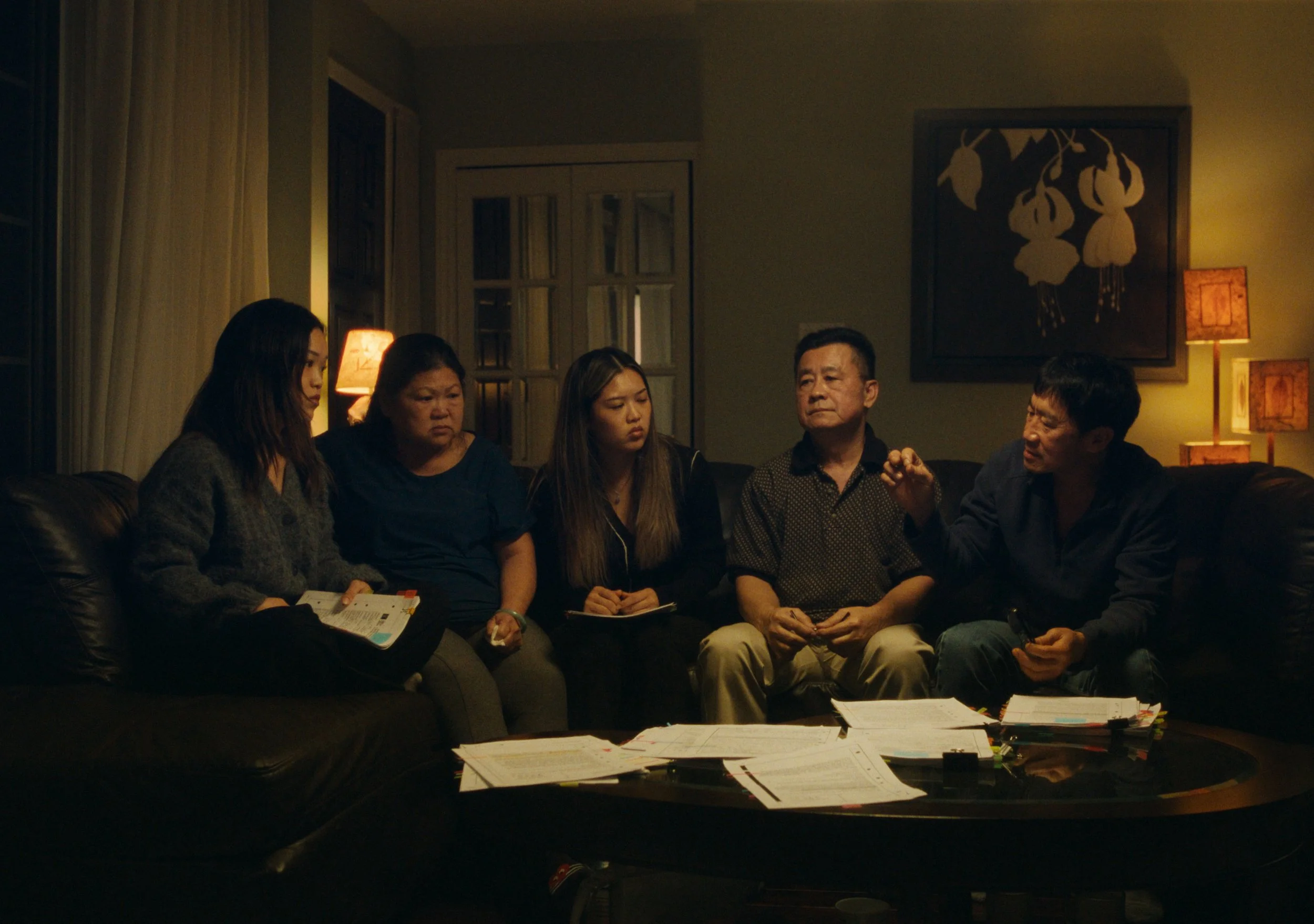
Carol: Yes, I think, well first of all they have seen the film. They've seen it before we knew where it would be in the world, before we knew it would get that it would get selected at TIFF. My dad saw the film before we locked the film. So there was a huge relief when I felt their stamp of approval and that was the most important thing to me because these relationships are the ones that are going to continue even when the film is over and it really marked a moment of bonding and change in our family. It was a catalyst that helped us reunite and reconcile with what we were left with when my uncle passed and so I think anytime you work with your family it's very difficult because you're wearing multiple hats and you can't just arrive with a director's agenda. It’s a relationship that truly extends beyond the lens so there was a lot of trust that had to be built. I leaned on a lot with my cousins as well to help me build that trust because they had a curiosity to learn more about their father and I wanted the film to have the omnipresence of my uncle and one of the big actionable items that we did to understand him was to obtain the records, his medical records and to read them together and that was something that had to be led by my cousins because it was legally their asset after he passed. So you know they had to go to court, they had to do all these jump throughs hoops to to even access these papers and so yeah it was a lot of trust building outside of the lens and discussions of where can I push and where can I not push.
Hailey: In your cousins having being the ones who were able to find the medical records, would you say that was, because the film came from your short and your discussions with your father. Would you say that you set out to find the medical records before the film, before you started the documentary or you like knew about them, is that what brought it into the documentary?
Carol: I think it was before. My timeline is a little bit blurry because it's been almost like six years now but my interest in starting the film was before I discovered that it even existed. I remember we had started discussions with CAMH, which used to be Clark Institute and then they turned to CAMH now, and I was emailing back and forth to see even if they kept the records because after a certain amount of years they get destroyed. So I knew there was a possibility that I would have to make a film without it and it had to be an option for me to continue the film even if it didn't exist and luckily they kept it. I think they keep it for like 15 years so we were just at the edge, like had we waited any longer it would have not existed.
Hailey: Wow, in doing that too, if it was the 15 years, so it was a long process to get everyone back together right because it feels like there was a separation after your uncle's passing if I'm right in saying that and then there's parts in your film where you do discuss how they wanted to go back to Vietnam, but there was always a death. There was always something stopping them. What would you say finally got you guys to go back there? Was it the making of this documentary or would it have happened?
Carol: Yeah, it was definitely the making of this documentary and feeling an energy to want to reunite again and just not knowing how and so when I learned that what my uncle Huang, who was in the film, told me that my grandparents had always wanted to do this trip. I thought what a better way and a more beautiful way to do it when you know we have this omnipresence of remembering of death of my uncle and a desire to reunite and reconcile and use that as an objective landscape to heal together. Because I think the story could have definitely had it been told in Canada where my family are, it would have been hard to take your habits and the life in which we both know, to really dive into an experience together because you know the ways in which we became close was removing ourselves from what we know and having a new experience together where everyone is on the same foundational level.
Hailey: I was going to follow that by, or I mean I feel like you've answered, but I was also going to ask, do you think there would have been a way to get back together with your family had you not started the process or is that a little personal? I'm not sure, you know because everyone family is different but would you say you're glad that this was able to happen even if it wasn't a sad situation.
Carol: You mean the film or the past?
Hailey: No sorry like being able to get everyone back together.
Carol: Oh I think it still would have happened, we just have to make some time for it and that's what we did for the film. I think it would have happened but in a more vacation way, in a way where it wouldn't have as much of a significance in having a goal to discuss stories of my uncle and I think the film project in itself allowed us to really focus our energy on intergenerational storytelling and focus on stories of who was my uncle when he was in Vietnam or how can we use this space together to just be. I think when a film project comes into the space and I think I've worked in documentary long enough to understand that a camera shifts a dynamic. It allows for this common understanding that we are in this for a particular thing and to actively listen and to create space for that one thing and for us that goal was reunion, for us that goal was my uncle and understanding his story and had it not been for the film I think you know the experience of going back to Vietnam would have still been meaningful but in other ways. So this project really helped us focus ourselves into what I think mattered in that moment.
Hailey: Do you think that you were able to do this project and work with your family so well from your past experience on other documentaries or do you think that you could have done it either way, if that makes sense?
Carol: Totally I mean I don't think had it been for No Crying, if I didn't make that film I would have not made this one because maybe I wouldn't have discovered my dad's story but now having made No Crying. Still Night, Burning House is the second time I'm working with family so I learned a bit of this and that, some skills, some tools in my toolkit to navigate personal storytelling in that way, so yeah.
Hailey: That's good, yeah it's always good to be able to learn something like in both ways for your career and for your family as well. Do you, so Still Night, Burning House, there's multiple times where you focus on, there’s one shot and then the shot comes back, what would you like would you be able to talk about that a little bit more, just to explain why that house and its importance?
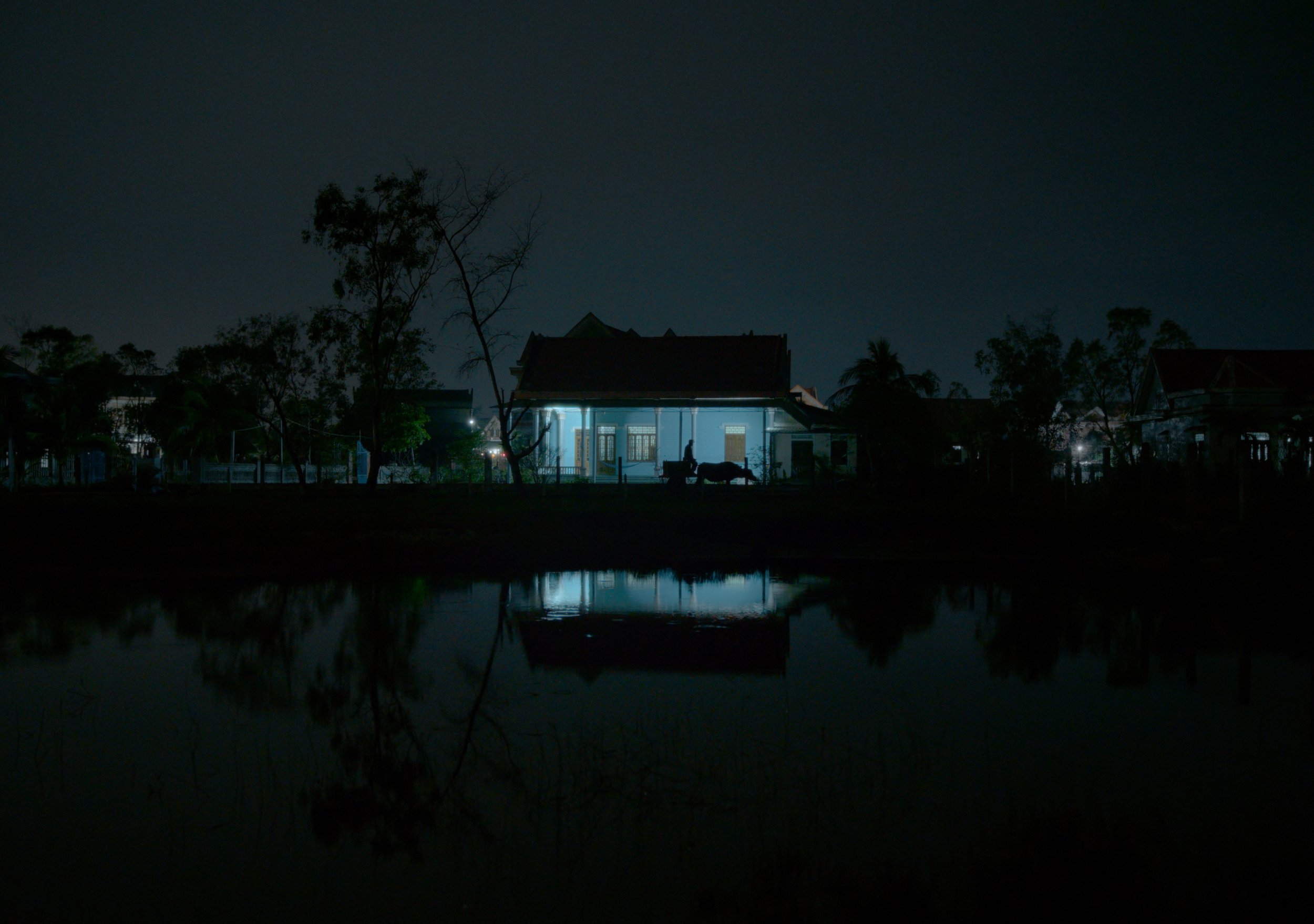
Carol: Mm-hmm, there were so many coincidences, of what me and my DOP Juliette [A. Lossky] would call cinema magic, that we encountered while creating the film. I love this question because it allows me to talk about this, because so much of the film and the visuals that you see the house and the oxen included were things we could not imagine ourselves and they were artifacts that we discovered along the way of making the film and having a feeling or a goal in mind of oh we would like to create a ghost world. So it was on in the back of our head unconsciously and then one day we're location scouting and we come to the beach at 4AM in the morning to check out the light at that time and then you see these figures walking down and we're like whoa it looks like we're in the afterlife, like what's going on and the same thing with the house.
We were scouting and we just see this beautiful house stick out and it inspired, it fit right into the ghost universe that we wanted to create. Same for the birds. I didn't know that I would have bird symbolism before filming and then for some reason as we were discovering rituals and the interviews and just living the process of making the film and the experience of being in Vietnam with my family. We saw so many parallels of liberation of my auntie talking about the story with my uncles releasing birds and then there was the bird ritual and then the bird cafe which we did not plan at all. It just coincidentally was the cafe outside of the hotel we were staying at. So yeah it’s, I think in documentary sometimes you can't, and it's a beautiful thing, you can't script everything and life will show you a path that is grander than perhaps what you would have written yourself.
Hailey: For sure. I was actually just about to ask you that, I was going to say would you say that you were able to create those things because it wasn't scripted and had it been a script you might not have looked for it or seen it even if it was right in front of you? In your documentary making, you’ve talked about how it helped you grow and about how it helped your family grow as well. Would you say that it also became part of the healing process and do you think sharing it with the world can help other people heal in theirs? Like, I see it when I see a family healing and it reminds you of other families out there who might be distant. Do you hope in some way, it might not be needed, but do you hope in some way that people can reflect on it and want to reach out?
Carol: Yeah I think sometimes you watch a film and it strikes a chord with you and it makes you feel a certain way or it reminds you of something and I hope my film can do that with others and for the few people if there are any who are inspired to reach out and have a little courage to do something or say something that they usually wouldn't otherwise with their family. I think it would be really meaningful to me.
Hailey: For sure. I really believe, I feel like people can because there's so much, no matter like you said earlier it doesn't matter the type of or where your grief comes from but we all deal with it differently, like when you said your dad was silent, I find my dad silent sometimes too so I feel like there's this element and it's so beautifully shot and in that too, what would you say was your purpose of putting not just your interviews and you have your sit downs with your family but then you put the scenery in it and stuff. How was that, what made you want to do that instead of just making it all, like you talked about the ghost world you created but the other shots as well?
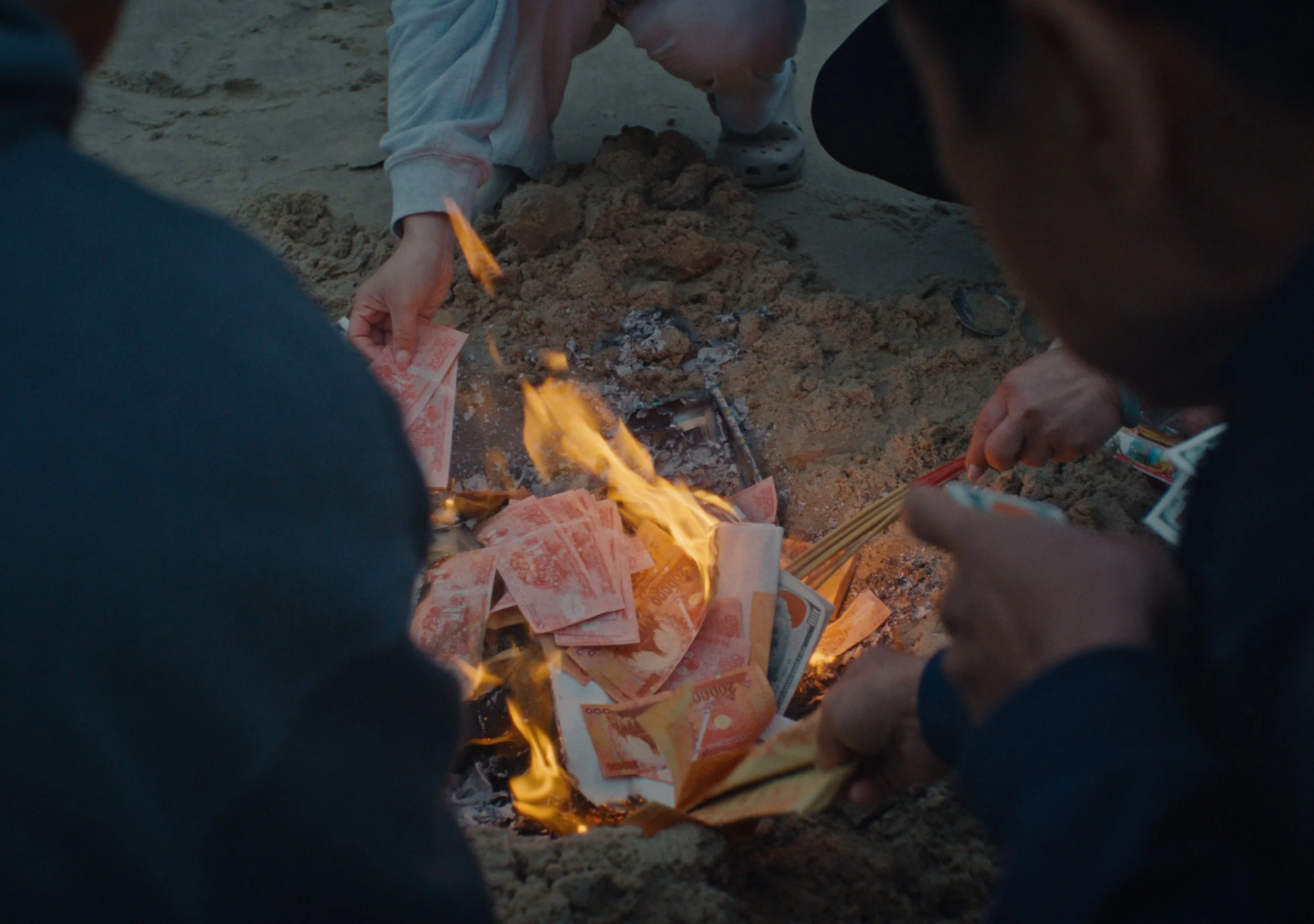
Carol: Thank you for asking, I love talking about the technical things. I’ll elaborate on the ghost world first but to me I wanted this film to be a letter to my dad. The ghost world was a way in which I could script something that didn't happen in real life and change the narrative a little bit in which he does discover, you know, there is an after world that gives him a little bit more hope and in real life. He does change his mind, that we don't speak about in the film, but he does believe in something now, we don't know what but something. And then the rituals world I love. I wanted to talk about how certain rituals regardless of if there is scientific evidence to it or not, which you know for burning joss paper and sending messages through incense or releasing birds, what are the odds and the chances that it does what we, what it signifies right. But I think the power in these rituals is in that mystery and is in the storytelling and the narrative that we're telling ourselves to help us heal. So I wanted to create this juxtaposition where there's a death industry in a way, where hope and grief, there’s an outlet for hope and grief and these rituals serve that. So yeah, that was my intention for creating these three threads and I think it's hard to tell a story about a family who silence is a thing that's keeping them together so to be able to go into the internal and do that in an experimental way is necessary for a story that like mine, like my family’s.
Hailey: As you say that it does make sense because you do get more than just what's said, you get what's felt as well through that. Do you think that, because you took your last short and it brought you into Still Night, Burning House and then from what you've learned here, do you think you have something you want to do next? Or, well, do you think you'd ever change it and fully create a story, with all that you've learned from your family, like a fictional story of grief that you'd want to explore?
Carol: I have a feature screenplay that I'm finishing, that I've been working on for five years about a family and what happens to this family after the matriarch of the family dies and the sibling dynamics change. So that one's in the works and I have a short fiction film that I'll be shooting in October that's totally different from what I've done before. It's a satirical thriller so…
Hailey: That is quite different.
Carol: Yes, very different. But I think I've reached a part in my creation process where I've just told a lot of sad stories and stories connected to my childhood that was just littered with a lot of death and grief and there is a part of me and my personality that I have not yet explored which is the less depressing side of Carol and so this film is showing that other side.
Hailey: That's exciting, I wish you the best with that. I hope I can see it.
Carol: I hope so too maybe next year.
Hailey: Yes it's nice to be able to see as you expand and move forward what you can do and what you want to do with your future projects. In saying that as well, I’ve talked to a couple filmmakers recently and I've talked to them about their premieres for films and stuff. So because you live in Canada but then you shot or you made most of the film going back to Vietnam, how does it feel to be able to have the world premiere at TIFF?
Carol: Very special. I was born and raised in Toronto. My family is in Toronto as well so they all can come. Yeah so it feels kind of full circle in a way.
Hailey: Beautiful
That was all the questions I had. It was a very beautiful film, very personal. Thank you and I hope everyone, I hope other people feel the feelings, I mean on their own level but the feelings I felt because it is personal and it’s, thank you for sharing such a personal story.
Carol: Oh thank you Hailey, and can I ask how you came to discover the film and interview me out of all the films that you could choose?
Hailey: So, I love Canadian films but then I think I got the email from Jennifer and it was NFB and I know the National Film Board.
Carol: Mm-hmm.
Hailey: Yeah and in Elementary school or High school we used to watch a lot of their documentaries so I think it just reached me in the right way. Then because I hadn't entirely looked at the, if I'm going to be honest, looked at the TIFF slate because I have been doing other film festivals in the UK but then when she sent it I recognized your name. I’m not sure if it was from a prior TIFF but yeah and then I was like this sounds interesting and I watched it and it's very pretty and very, very, very personal. So i was trying to think and then I always love talking to more independent level filmmakers who are doing their, oh well I mean, you do your own thing so I just thought yeah and then she said you were free and I was like yeah and then I was trying to think, this is why I'm stumbling because I was trying to think of how to ask you such, try to word such personal questions. So thank you.
Carol: Oh, thank you. You did a great job and yeah I got to talk about the style and the technicality which I don't always do, so thank you for asking those questions.
Hailey: Thank you, it's nice to be able to ask both, so thank you…Good luck with the premiere. I hope I can see you at TIFF at some point in person.
Carol: Thank you, I hope to see you there too
Hailey: Thanks have a good night, bye.
Carol: Bye.
Still Night, Burning House premiered at the 2026 Toronto International Film Festival on Saturday September 12, 2026. As part of the TIFF Docs programme, Carol Nguyen’s piece is truly heartfelt and personal. Presenting her own family in the most authentic and compassionate way. Inspiring others to take a chance, and do what might need to be done.