An unusual feeling when you are not entirely sure of where the characters will go next, or what their next decisions may be. Yet ultimately, is that not how we are supposed to be kept on our toes in a film? To experience surprise and shock instead of a knowing of what will happen next. Predictable films and characters are less fun to follow for the most part, so getting to experience this precision when playing with the characters is something different we do not see often.
In Summer War, writer-director Alicia Scherson is not afraid to make her protagonist the biggest loser possible. She seems to genuinely want to understand his internal thoughts and why he wishes to do what he does. A thread built amidst the man-child main character and the drastic life changes that happen around him, without him even knowing. With clever ideas of how to set the stage, and strange yet fitting transitions, Summer War takes us somewhere unexpected.
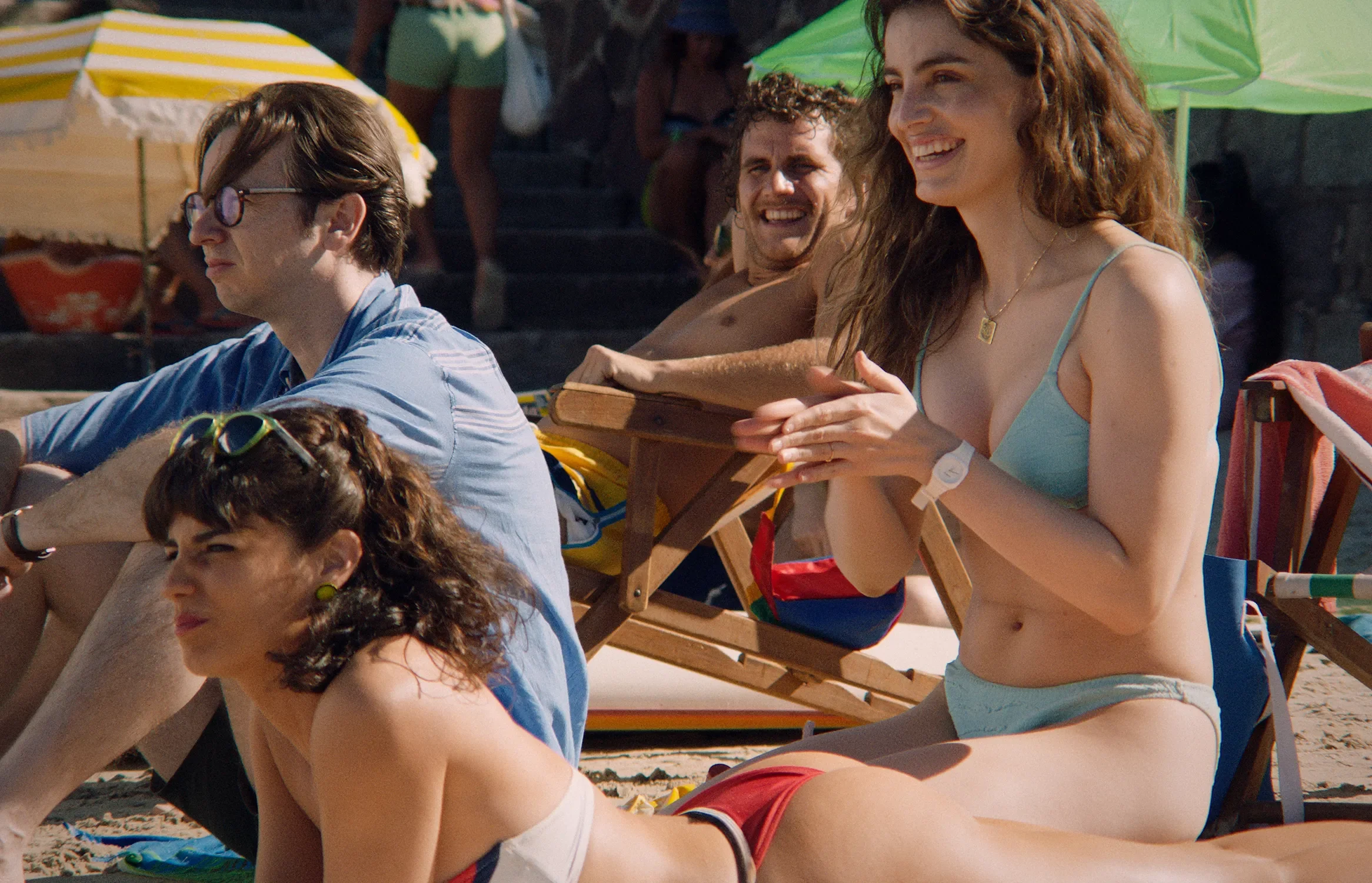
You honestly could be shocked to think that Summer War is Scherson’s adaptation of The Third Reich novel written by Roberto Bolaño. Yet once the film begins and you are introduced to its main character, even without knowing the story within The Third Reich novel, just the title alone begins to become clear. Though completely different titles, Summer War follows the same plot within Bolaño’s novel and feels quite truthful to the original story. Seeing a novel that was once lost transported into the medium of film feels somewhat reflective upon memory and the importance of preservation.
Udo Berger (Dan Beirne) arrives with his girlfriend Ingrid (Lux Pascal) at a seaside hotel in Chile during the boiling hot summer of 1989. Obsessed with World War II strategy games, he appears to be on some sort of mission within his latest game based on The Third Reich. What originally was promised to Ingrid to be a carefree vacation quickly changes suit. Drifting between sunburnt idleness and long game playing sessions of his complex war game, Udo becomes increasingly absorbed in the game’s logic. An absorption that almost takes him off the edge and away from reality.
Summer War moves quite slowly, giving the audience time to wonder just what Udo is up to. And the idea whether or not he is truly attached to his relationship with Ingrid or more invested in this board game of his comes to the surface. Yet, when the disfigured local known as “The Burned Man” (David Gaete) appears, the couple’s holiday equilibrium is unsettled. From here on out, things will no longer remain simple or normal for Udo. Not that they ever were.
As a viewer, this simple holiday trip accelerates extremely fast. As easy as a relaxing beach day, Udo and Ingrid enjoying the sun and sea. All of a sudden in a bar where a fight breaks out, police coming from every which way and foreign languages being spoken. Your heart rate accelerates as you believe the couple will be separated for good. But that is not where the plot appears to take us.
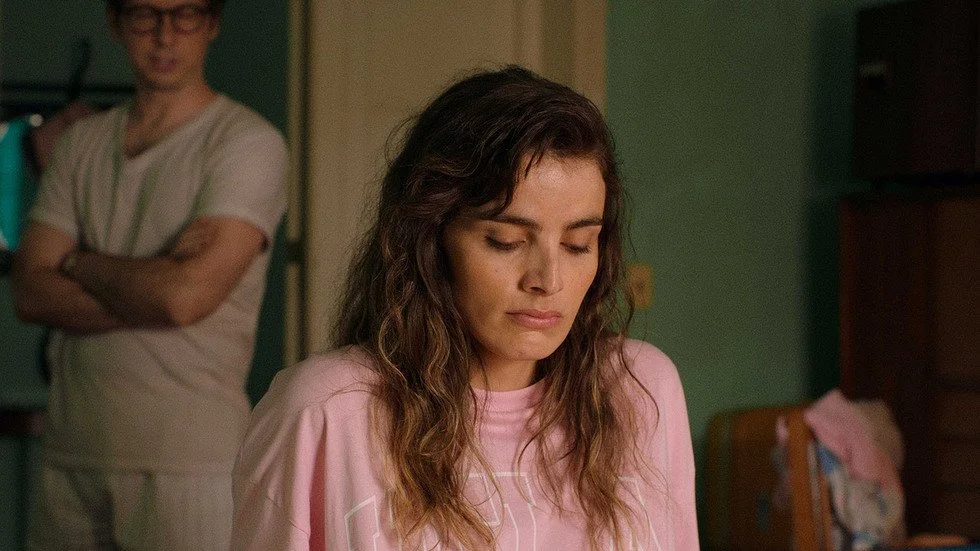
Perhaps it is the score that fully takes us through the story. As Udo uncovers secrets in the real world, he also plays each character forward in his board game. The game becomes all too genuine for us in the audience when the story takes a rough turn. Udo’s connection with “The Burned Man” brings him deeper into this psychological terrain. An intersection of violence, control and desire all steer him down the wrong path. So much so that when friendly acquaintance Charly (Agustín Pardella) goes missing, Udo believes he can use his knowledge developed from the game to stay longer than his trip had been planned and uncover the mystery.
Udo’s decisions quickly change Summer War from being an enjoyable and relaxing summer holiday film and take us into uncharted territory. A haunting exploration in more senses than simply the plot. Scherson takes Bolaño’s story and studies the idea of masculinity and obsession. What it truly takes for men to uncover how much they want to be manly is showcased. The internal being and ideals they force upon the world around them. We witness Udo attempting to prove to the rest of his acquaintances at this seaside hotel, whether they wish to bear them or not. An obsession with uncovering the truth of Charly’s disappearance and winning his game. Scherson brilliantly explores the male psyche and makes us all witness the brink of collapse, of a pure insanity of obsession.
You can feel just how much Scherson wanted to explore the character Bolaño created in 1989. Male characters are not often portrayed in such a way. But even with some iffy plot choices, perhaps not all due to Scherson’s script and more from the original story, you can understand where she comes from in her character study. Set up like a board game itself, Summer War requires the viewer to do much of the work. Fitting it together piece by piece, the story might not convey itself completely if you get it wrong. Yet something will form itself out of the fragments you can put together, and what that may be could be different to each.
Summer War is a strange and albeit entertaining study of the male psyche. Rarely can one see a man be shown in such an immature fashion. With its premiere at the 2026 Tribeca Film Festival, Scherson did just that. She gave us a summer holiday film that takes us to places completely unexpected. Reincarnating a once lost piece of literature and making it a female story of a lonely and childish man.